
Clarity Is a Skill, Not a Personality Trait
Everyone remembers two kinds of teachers: the ones whose explanations landed like a window opening, and the ones who clearly knew everything and somehow transmitted nothing. The difference is rarely knowledge. Experts suffer the “curse of knowledge” — they have forgotten what it is like not to know, so they skip the steps that feel too obvious to say and reach for the precision that impresses colleagues instead of the example that rescues beginners. Explaining concepts clearly is a learnable craft with identifiable techniques: anchor to what the learner already has, translate the abstract into the concrete, sequence mercilessly, and verify understanding by evidence rather than by nodding. This guide breaks the craft into its working parts, for classroom teachers, trainers, mentors, and anyone who has watched a face go blank mid-sentence and wondered what to do next.
Start Where the Learner Is, Not Where the Subject Starts
Every explanation has two possible beginnings: the subject’s own logic (definitions first, foundations first) or the learner’s current map of the world. Textbooks choose the first; great explainers choose the second, because new knowledge only sticks when it hooks onto existing knowledge. Practically, this means three opening moves. Diagnose first: ask one or two questions that reveal what the learner already thinks — including the misconception you will probably need to dislodge, since an unaddressed misconception quietly filters everything you say next. Lead with the purpose: “this is how a bank decides whether to lend you money” gives the brain a filing cabinet before you hand it files; learners who know why a concept matters attend to how it works. Use their examples before yours: the learner’s own context (their job, their game, their budget) is the richest anchor available, and explanations built on it are remembered as experiences rather than as lectures. The expert’s hardest discipline is this section’s: spend the first minute inside the student’s head instead of inside the topic.
The Concrete Toolkit: Analogy, Example, Contrast
Abstract ideas become clear when they are temporarily borrowed a body. Analogy maps the unfamiliar onto the familiar (“the CPU is the kitchen, RAM is the counter space, storage is the pantry”) — powerful precisely because it imports a whole structure at once, and dangerous only when its limits go unstated, so name where the analogy breaks. Worked examples beat definitions for anything procedural: show one complete, narrated performance of the skill before asking for any performance — the narration (why this step, what I am checking here) is where the teaching lives, since the steps alone are visible in any textbook. Contrast sharpens boundaries: learners grasp a concept fastest when shown a non-example beside it — the sentence that is not a metaphor, the argument that almost commits the fallacy — because knowing what a thing is not tells the brain where its edges are. Sequence these deliberately: analogy to open the door, example to walk through it, contrast to map the room. And ration novelty: one new idea per explanation is generous; three simultaneous new ideas guarantee that the learner retains whichever was most vivid, which is rarely the one you needed — a discipline that also underlies the evaluation skills in our companion piece on critical thinking skills, where strong arguments are built the same way: one claim, supported, before the next.
Chunk, Sequence, and Say Less
Working memory holds a handful of items at once — the bottleneck no charisma can repeal. Clear explainers therefore chunk: break the concept into named parts of three or four, teach each to a small checkpoint, and only then assemble. They sequence by dependency, not by the textbook’s table of contents: what must be true in the learner’s mind before this next sentence can work? And they practise the hardest technique of all — saying less. Every interesting aside, every “and also,” every precision that serves the expert’s completeness rather than the learner’s progress is a withdrawal from a tiny attention account. The professional move is triage: identify the one misunderstanding that blocks everything downstream and spend the explanation there, letting secondary details wait for the second pass. A useful self-test: after your explanation, could the learner state the idea in one sentence that is correct? If your explanation cannot survive being compressed, it was never a structure — it was a tour.
Check Understanding With Evidence, Not Nods
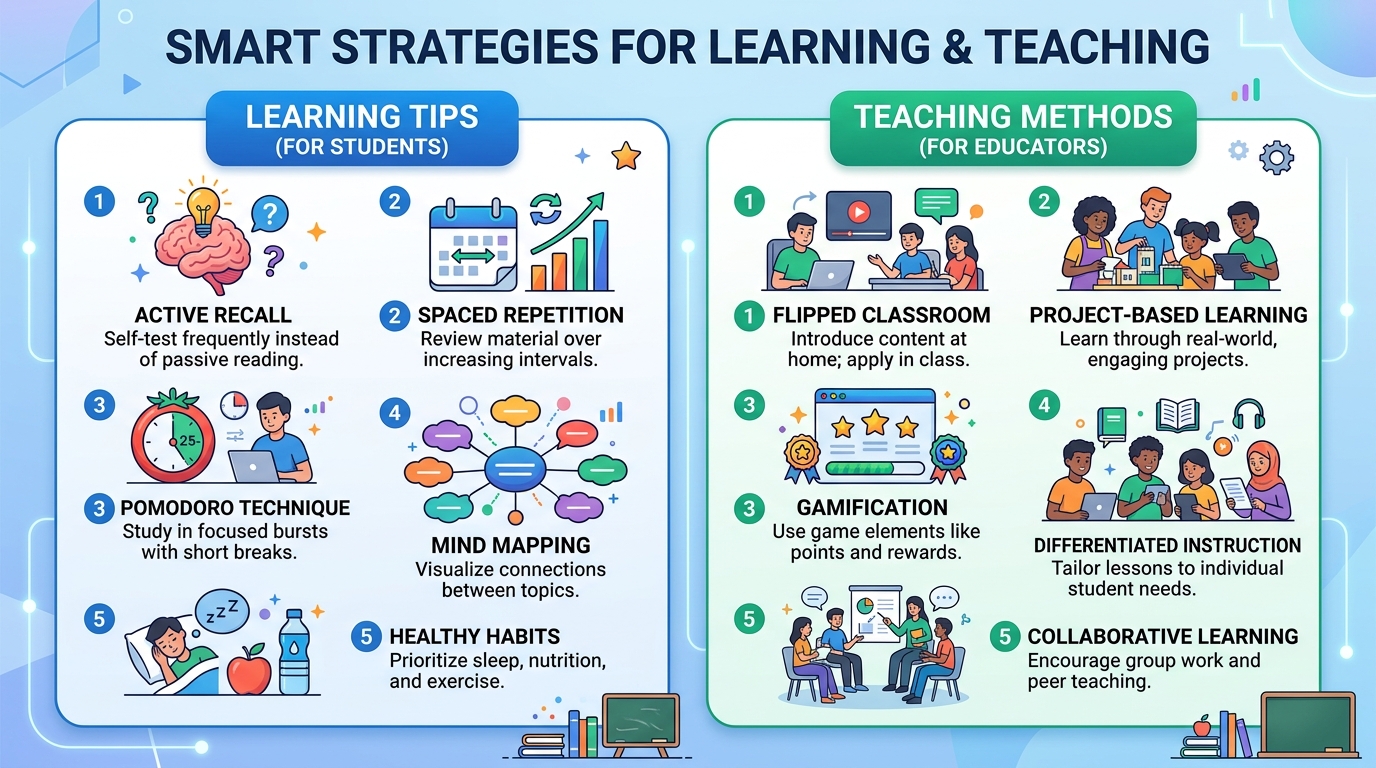
“Does that make sense?” is the least informative question in teaching: politeness, embarrassment, and genuine confusion all answer it with the same nod. Clear explainers collect evidence instead. Ask for the example back: “Give me a case where this would apply” exposes understanding and misunderstanding instantly. Use the teach-back: “Explain it to me as you’d explain it to a friend” — the learner’s version shows you exactly which load-bearing step collapsed. Pose the hinge question: one multiple-choice question mid-lesson whose wrong answers each reveal a specific misconception, so the next five minutes can target the real fault. And treat errors as data with gratitude: the student brave enough to produce a wrong answer in public has handed the whole class the map of where the explanation failed. Teaching, at this resolution, is a feedback loop wearing a lecture’s clothes — explain, probe, adjust, explain again — and the loop, faithfully run, is what “being a clear explainer” actually consists of.
The Bottom Line
Explaining concepts clearly, as a craft: start from the learner’s existing map, open with purpose, translate through analogy, worked example, and contrast, chunk ruthlessly and say less than you know — then verify with teach-backs and hinge questions instead of nods. None of it requires talent; all of it requires respecting the bottleneck every brain shares. Practise on one explanation this week, and let the learner’s evidence — not your fluency — grade you.