Every subject looks complicated from the outside and surprisingly logical once you understand its foundations. The difference between students who progress steadily and those who stall is rarely talent; it is whether the basics were ever properly secured. Foundational learning concepts are the small set of ideas about how learning itself works — how memory forms, why practice must be structured, and how feedback corrects course. Master these early and every course, certificate, and career change that follows becomes easier.
Learning Is Building, Not Collecting
The first of the foundational learning concepts is that knowledge is constructed, not poured in. Your brain connects new information to what it already understands, which is why two students can sit through the same lesson and leave with completely different levels of understanding. The one who linked the new idea to examples, prior topics, and real situations retains it; the one who tried to memorise isolated facts does not.
This is why starting a new field feels slow and then suddenly accelerates. If you have ever asked yourself where to begin with an unfamiliar subject, you are not alone — this guide on where to begin cybersecurity education walks through exactly that problem in one field, and its advice generalises: find the entry concepts everything else depends on, and learn those first, in order.
Teachers call the connections you build a schema: an organised structure of knowledge that new facts can attach to. A rich schema is why an expert reading about their field remembers nearly everything, while a beginner reading the same page remembers almost nothing. The expert is not memorising harder; every sentence connects to twenty things they already know. Building schemas deliberately — through examples, comparisons, and revisiting core ideas in new contexts — is slow at first and then compounds for years.
Memory Has Rules, and You Can Use Them
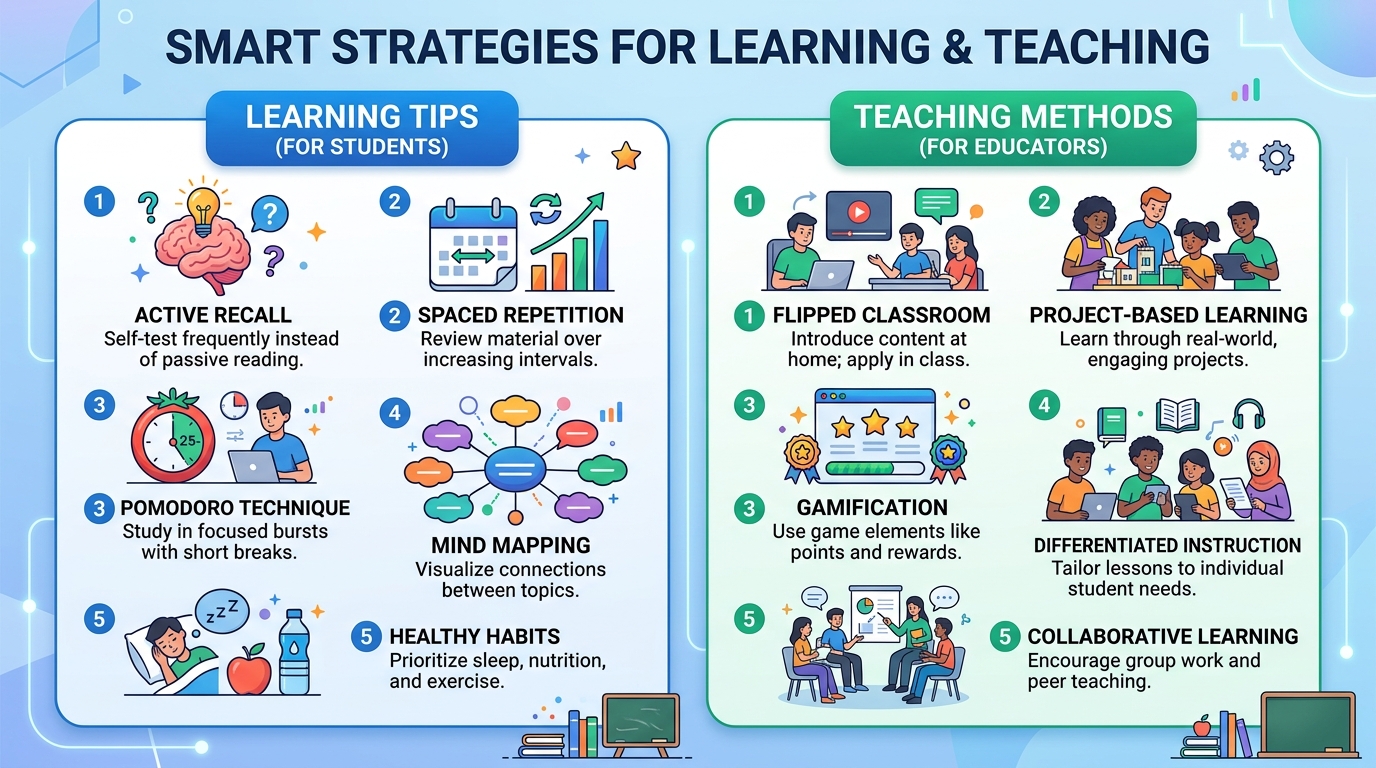
Working memory is small — only a handful of items at once — while long-term memory is effectively unlimited. Most learning failure is a traffic jam between the two. Concepts such as chunking (grouping items into meaningful units), dual coding (pairing words with visuals), and retrieval practice exist precisely to manage that bottleneck.
Retrieval practice deserves special emphasis. Actively recalling information strengthens memory far more than reviewing it, which is why testing yourself, explaining ideas aloud, and doing practice problems outperform highlighting and rereading. Spacing those retrieval sessions over days and weeks multiplies the effect, because memory consolidates between sessions, largely during sleep.
Prior Knowledge Is the Strongest Predictor
Of everything researchers know about learning, one finding towers above the rest: what a learner already knows about a topic predicts how well they will learn more of it. This is encouraging and cautionary at once. It means early gaps compound — a shaky grasp of fractions quietly sabotages algebra, statistics, and eventually data work — but it also means repairing foundations produces outsized returns.
So before pushing forward in any subject, audit the prerequisites honestly. Work a few problems from the level below. Read the introductory chapter you think you can skip. Students who build this habit stop experiencing “hard topics” and start experiencing “missing foundations,” which is a much more solvable problem.
Feedback Turns Practice Into Progress
Practice alone does not make perfect; practice with feedback does. Without correction, repetition simply automates mistakes. Foundational learning concepts around feedback are simple: it should be specific, timely, and focused on the work rather than the person. “This step assumes the variable is constant, and it is not” teaches. “Wrong” does not.
You can manufacture feedback even when no teacher is available. Worked examples, answer keys used after attempting problems, model essays, and recording yourself performing a skill all create a standard to compare against. The key discipline is attempting first, checking second. Peeking early destroys the very struggle that produces learning.
Struggle Is a Feature, Not a Malfunction
Many learners interpret difficulty as evidence they are bad at a subject. Learning science suggests the opposite: the conditions that feel hardest — testing, spacing, mixing problem types — produce the most durable learning, while comfortable methods produce an illusion of mastery that collapses under exam conditions. Psychologists call these “desirable difficulties,” and they belong on any serious list of foundational learning concepts.
This reframing matters emotionally as much as intellectually. A student who expects learning to feel effortful persists through the hard middle of a course. A student who expects it to feel smooth quits at the first real obstacle, convinced the subject is not for them.
Environment and Access Are Foundations Too
Foundations are not only mental. The physical and digital conditions of study quietly determine whether good intentions become sessions at all. A consistent place to work, materials gathered before you begin, and technology that simply works remove the small frictions that derail beginners. This is especially true for online learning, where a failed login or an unstable connection can end a study session before it starts — which is why practical troubleshooting resources, such as this rundown of connection problems and common questions for new users, are worth bookmarking before you need them.
Treat preparation as part of learning rather than a delay before it. Ten minutes spent organising your desk, downloading materials for offline use, and confirming your access to every platform protects hours of study time later. Strong foundations include a working environment, not just a willing mind.
Metacognition: Thinking About Your Own Thinking
The final foundation is metacognition — monitoring your own understanding as you learn. Skilled learners constantly ask: could I explain this to someone else? Could I solve a new problem with this, or only recognise the worked example? They plan before studying, check during, and review after, adjusting strategy when the evidence says it is not working.
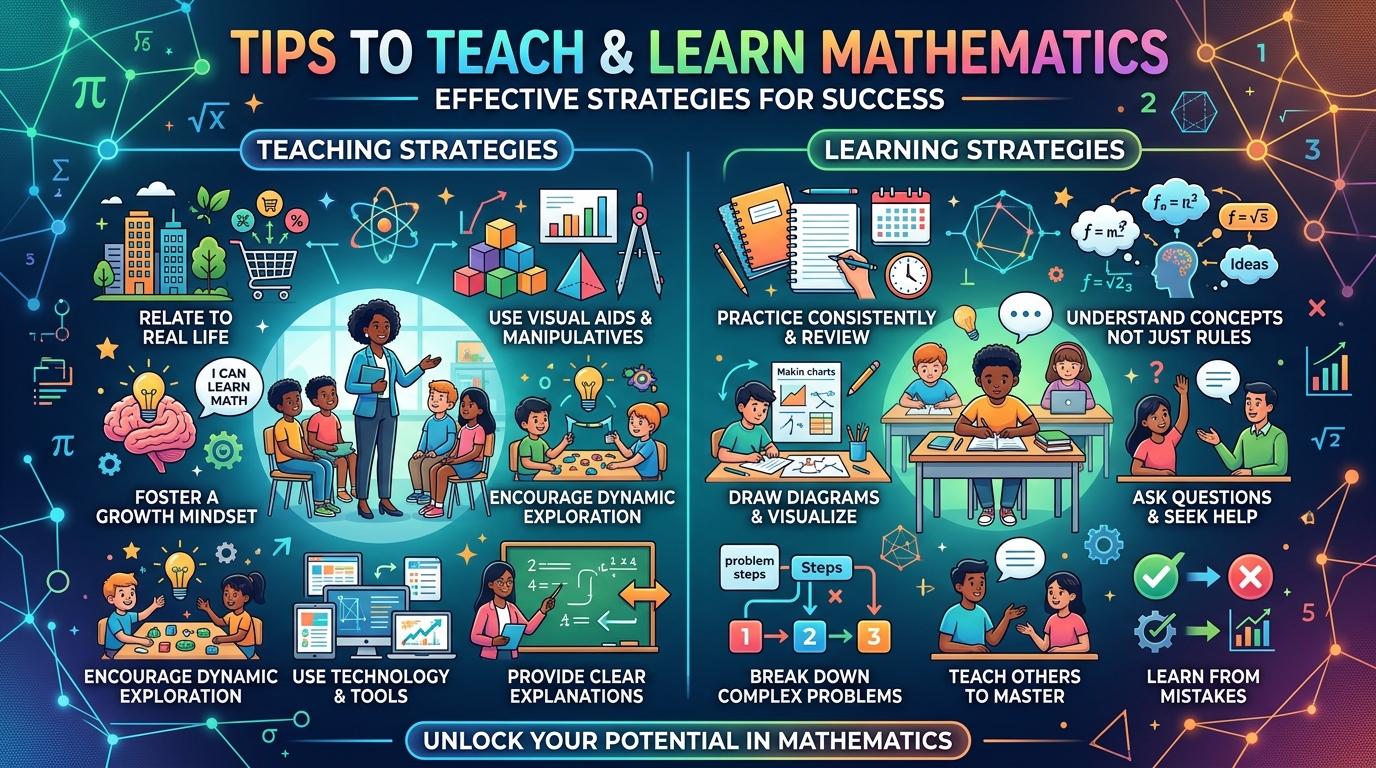
None of these foundational learning concepts requires special equipment or ability. They ask only that you build deliberately: connect new ideas to old ones, retrieve instead of reread, repair gaps early, seek feedback, welcome productive struggle, and watch your own understanding honestly. Students who internalise these habits stop depending on motivation and start depending on method — and method, unlike motivation, shows up every day.