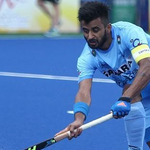

Leadership in field hockey is often discussed through captaincy, speeches, and moments of pressure, but much of it happens inside the structure of the game. For a midfielder such as Manpreet Singh, influence comes from positioning, passing decisions, communication, defensive coverage, and control of transitions. His role connects India’s defense with its attack, which means that leadership can appear in actions that never become goals or assists.
A midfielder operates in an environment where several options develop at once. He must know where teammates are positioned, identify pressure, assess space, and decide whether the next action should accelerate or slow the game. Digital audiences may encounter rapid decision loops in entertainment formats such as fortune garuda 500 game login, but Manpreet’s decisions on the field are based on information, positioning, and tactical responsibility. Controlling the ball is only one part of controlling the match.
The Midfielder as a Connection Point
Field hockey formations depend on connections between lines. Defenders need passing options when building possession, while forwards need support when receiving the ball under pressure.
The midfielder links these areas.
Manpreet can drop toward the defensive line to provide an additional passing route. When India progresses, he can move higher to support the next phase. His positioning determines whether teammates have simple options or are forced into passes with greater risk.
This role requires constant movement without the ball. A midfielder may create value simply by occupying a space that prevents an opponent from pressing another player.
Leadership begins here because positioning helps organize the actions of teammates around him.
Tempo Is a Form of Control
Not every possession should move forward at maximum speed. One of a midfielder’s responsibilities is recognizing when acceleration creates an advantage and when patience is more useful.
Manpreet can increase tempo with a forward pass after a turnover, especially when the opposition has not restored its defensive structure. In another situation, the better decision may be to recycle possession through the defense.
This distinction affects the entire team.
If India attacks too quickly when players are poorly positioned, losing possession can expose space. If the team moves too slowly when an opponent is vulnerable, the opportunity disappears.
A midfielder therefore controls time as well as territory. Experience helps identify the moments when the match should change pace.
Leadership Without Possession
Much of Manpreet’s work happens when India does not have the ball.
Central midfielders must protect passing lanes, support the press, and cover spaces created when teammates step forward. This requires awareness of both the ball and players away from it.
If a forward presses an opposing defender, the midfield line needs to move behind that press. Otherwise, the opponent can play through the first line and attack open space.
Manpreet’s positioning helps connect these movements. He can step toward a receiver, block a central pass, or remain deeper to protect against a ball played behind the press.
These decisions may not produce a tackle, but they can determine where the opponent is allowed to play.
Communication Organizes the Team
A midfielder occupies a position that provides information from several directions. Defenders are behind him, forwards are ahead, and opponents can approach from either side.
Communication is therefore part of the job.
Manpreet can tell a teammate when pressure is arriving, direct another player toward an open opponent, or signal when the defensive line needs to shift. These instructions reduce uncertainty.
Communication also becomes important during transitions. When possession changes, players have only seconds to reorganize. Someone needs to identify whether the team should counterattack or recover its shape.
An experienced midfielder can provide that signal through movement and verbal instruction.
Transitions Reveal Decision Quality
The moments immediately after possession changes are among the most important phases in modern hockey.
When India wins the ball, the opposition may be spread across the field. A forward pass can exploit that structure before defenders recover. However, attempting the pass without sufficient support can return possession immediately.
Manpreet must assess both possibilities.
When India loses the ball, his responsibility changes. Instead of thinking about progression, he may need to delay the counterattack, protect the center, or help a defender facing an overload.
This ability to switch tasks is central to midfield leadership. The player cannot remain mentally attached to the previous phase.
Passing Is About Manipulating Space
A midfielder’s pass should be judged by what it creates rather than only whether it reaches a teammate.
A sideways pass may appear conservative but can move the opposing press and open a channel on the other side. A pass backward can invite opponents forward, creating space behind them.
Manpreet’s role involves recognizing these consequences.
Forward passes become valuable when they break a defensive line or allow a receiver to turn. Short combinations can attract pressure before the ball is transferred elsewhere.
The midfielder is therefore not simply distributing possession. He is using possession to change the positions of opponents.
Experience Helps Manage Pressure
International matches contain periods when tactical plans become difficult to maintain. A team may concede a goal, face sustained pressure, or lose control of possession.
Leadership becomes important in these phases because emotional reactions can produce tactical mistakes.
A midfielder can help restore structure by choosing lower-risk passes, offering teammates an outlet, and keeping the team connected. Instead of responding to pressure with constant acceleration, he can help establish another possession sequence.
Manpreet’s experience at major tournaments adds value here. Repeated exposure to high-pressure situations creates a reference library for recognizing when the team needs urgency and when it needs control.
Leadership Also Means Supporting Specialists
Modern hockey teams contain players with different responsibilities. Defenders initiate possession, forwards stretch the opposition, penalty-corner specialists prepare for set pieces, and goalkeepers organize from behind.
The midfielder must help connect these roles.
Manpreet can support a defender under pressure, provide the pass that releases a winger, or position himself behind an attack to protect against a counter.
This work allows other players to perform their specialized tasks without leaving the team structurally vulnerable.
Leadership therefore becomes less about being the center of every action and more about making the system function.
Why Manpreet’s Influence Extends Beyond the Ball
Manpreet Singh’s importance to Indian hockey illustrates why midfield leadership cannot be measured only through goals and assists.
His influence appears in the timing of passes, protection of central space, pressing decisions, communication, transitions, and the management of tempo. Each action helps determine whether India plays as connected lines or as separate units.
A midfielder controls the ball for only a fraction of a match. The larger task is controlling what can happen around it.
That is where Manpreet’s leadership becomes most visible. By reading space, coordinating teammates, and deciding when the game should accelerate or settle, he influences the structure of the match even when the ball is somewhere else.