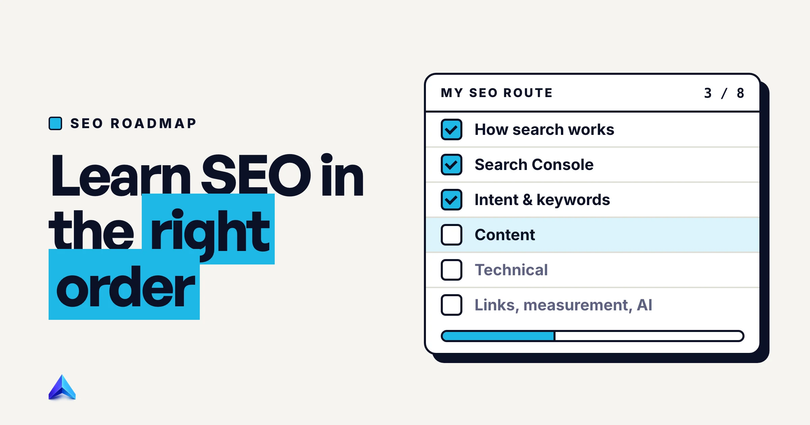

Are you interested in SEO but confused about which topic you should learn first? Stay calm, because you do not need to master every tool, strategy, and technical term at the same time.
A clear roadmap can help you study the basics, practise important tasks, and measure your progress without feeling overwhelmed. You can also adjust the roadmap according to your education, schedule, budget, and career goals.
This guide explains how to create an SEO learning roadmap in Pakistan, from setting your goals and choosing reliable resources to completing projects, building a portfolio, and finding professional opportunities.
How to Create an SEO Learning Roadmap in Pakistan
An SEO learning roadmap gives you a clear order for studying different skills. It helps you avoid random tutorials and gives each lesson a practical purpose.
Here are the main steps:
- Set a Clear SEO Career Goal
- Learn How Search Engines Work
- Choose Reliable Learning Resources
- Master Keyword Research
- Understand Search Intent
- Learn On-Page SEO
- Develop SEO Content Skills
- Study Technical SEO Basics
- Practise Internal Linking
- Learn Off-Page and Local SEO
- Track Performance With SEO Tools
- Build Projects and a Portfolio
1. Set a Clear SEO Career Goal
Start by deciding why you want to learn SEO. You may want a job, freelance clients, a successful blog, better business visibility, or a digital marketing career. Each goal requires a slightly different learning path.
For example, a freelancer needs client communication and reporting skills, while a blogger may focus more on keywords and content. Write your main goal at the top of your learning plan. Add a realistic deadline and divide it into smaller monthly targets. Anyone asking how to learn SEO in Pakistan should start with a clear purpose instead of collecting random courses.
Your SEO goal may include:
- Getting an entry-level SEO job
- Starting an SEO freelance career
- Growing a personal blog
- Promoting a local business
- Joining a marketing agency
- Building an affiliate website
2. Learn How Search Engines Work
Before using SEO tools, learn how search engines discover, understand, and organize website pages. Study the basic ideas of crawling, indexing, and ranking. These concepts will help you understand why a page may or may not appear in search results.
You should also learn the difference between paid advertising and organic visibility. Avoid memorizing complex terms without understanding their purpose. Use simple examples and apply each concept to a real website. Google describes SEO as work that helps search engines understand content and helps users decide whether they should visit a website.
Start with these basic concepts:
- Crawling
- Indexing
- Ranking
- Search results
- Organic traffic
- Search queries
3. Choose Reliable Learning Resources
A good learning resource should explain SEO clearly and include practical exercises. Avoid following every short video or social media tip because different creators may give conflicting advice. Choose one main course or learning series and use other resources only for extra support.
Students can review the Learn with GA YouTube channel for lessons related to SEO, blogging, and freelancing. Digital Applications also offers structured training that covers basic and advanced SEO, digital marketing, blogging, WordPress, and freelance skills. Its official course page identifies Engr. Ghulam Abbas as the CEO of Digital Applications and the course instructor.
These resources can provide a useful starting point, but learners should compare the curriculum, projects, trainer feedback, schedule, and student support before enrolling. No reliable independent ranking can prove that one person is the single best SEO expert for every learner.
Check these points before choosing a resource:
- Updated course topics
- Trainer experience
- Practical assignments
- Student feedback
- Project support
- Clear learning order
4. Master Keyword Research
Keyword research helps you understand what people search for online. Start with a general topic and find the words that potential visitors use to describe their questions or problems. Learn how to identify primary keywords, related terms, and long-tail phrases.
Do not choose a keyword only because it receives many searches. Check whether the term matches the website, audience, and business goal. Group closely related keywords so you can target them through one useful page. Create keyword sheets for different industries to improve your research speed and judgement.
Practise keyword research by finding:
- Seed keywords
- Long-tail phrases
- Local keywords
- Commercial terms
- Related questions
- Topic groups
5. Understand Search Intent
Search intent explains why someone enters a particular search query. A person may want information, a comparison, a nearby business, or a product to buy. Your content must match that purpose before it can provide a useful experience.
Search the keyword and review the types of pages that currently appear. Look at their formats, headings, titles, and level of detail. Then decide whether the keyword needs an article, service page, product page, or another format. Intent analysis prevents you from creating the right content for the wrong audience.
The main search intent types include:
- Informational: The user wants to learn.
- Commercial: The user wants to compare.
- Transactional: The user wants to act or buy.
- Navigational: The user wants a particular website.
- Local: The user wants a nearby service.
6. Learn On-Page SEO
On-page SEO improves the content and structure of an individual webpage. Learn how to write useful titles, descriptions, URLs, headings, and image text. Each element should explain the page naturally instead of repeating keywords without purpose.
Use one clear H1 and organize the main sections with H2 and H3 headings. Place the primary keyword where it fits, but keep the sentences natural. Add supporting terms only when they improve the explanation. Practise by optimizing old pages and comparing their structure before and after your changes.
Important on-page elements include:
- SEO title
- Meta description
- Page URL
- H1 heading
- Supporting headings
- Image alt text
7. Develop SEO Content Skills
SEO content should answer the reader’s question clearly and completely. Start each article with a focused opening and explain what the reader will learn. Use short paragraphs, descriptive headings, useful examples, and simple words.
Do not increase the word count with repeated or unrelated information. Add real experience, original observations, or practical steps whenever possible. Check every important fact before publishing the page. Google recommends creating helpful, reliable content for people rather than producing pages mainly to influence search rankings.
Strong content helps the reader first and supports SEO naturally.
Good SEO content should offer:
- A direct answer
- Clear explanations
- Practical steps
- Accurate information
- Original examples
- A useful conclusion
8. Study Technical SEO Basics
Technical SEO helps search engines reach and understand website pages. Beginners should learn the purpose of robots.txt files, XML sitemaps, indexing controls, redirects, canonical tags, and error pages. You do not need advanced programming knowledge to check many common problems.
Create a small practice website and inspect each technical element. Learn the difference between controlling crawler access and preventing page indexing. Google explains that robots.txt controls crawler access but does not serve as the correct method for removing a page from search results.
You should also learn how to create and submit an XML sitemap, while remembering that submitting one does not guarantee indexing.
Study these technical areas:
- Robots.txt
- XML sitemaps
- Page indexing
- Canonical tags
- Redirects
- Broken links
9. Practise Internal Linking
Internal links connect pages within the same website. They help visitors find related information and help search engines discover important content. Learn how to link supporting articles with service pages, categories, and main guides.
Use anchor text that explains what the linked page covers. Avoid adding links that do not help the reader. Create a simple spreadsheet that records source pages, target pages, and suggested anchor text. Review old content whenever you publish a new page and add useful links in both directions.
Use internal links to connect:
- Related blog posts
- Main topic guides
- Service pages
- Product categories
- Location pages
- Important older content
10. Learn Off-Page and Local SEO
Off-page SEO includes activities that improve a website’s reputation outside its own pages. Learn how relevant websites earn mentions and links through useful resources, expert contributions, partnerships, and public relations. Avoid buying large numbers of weak links because they rarely provide lasting value.
Local SEO helps businesses reach people in particular cities and service areas. Practise with a clinic, restaurant, training centre, shop, or home-service business. Review its contact information, local keywords, customer reviews, and location pages. These skills can help Pakistani learners serve small businesses and build early portfolio projects.
Practise off-page and local SEO through:
- Relevant outreach
- Guest contributions
- Useful resource creation
- Local keyword research
- Business profile reviews
- Location page planning
11. Track Performance With SEO Tools
SEO professionals need data to understand whether their work produces useful results. Start with tools that show search impressions, clicks, queries, pages, traffic, speed, and indexing problems. Do not collect reports without understanding what the numbers mean.
Choose a few important measurements that connect with the website goal. For example, a local business may care more about enquiries than total visitors. Compare performance across suitable time periods and record major website changes. Google Search Console’s Performance report shows queries, clicks, impressions, and changes in search traffic.
Important measurements include:
- Search impressions
- Organic clicks
- Keyword positions
- Organic traffic
- Leads or sales
- Page engagement
12. Build Projects and a Portfolio
Practical projects turn SEO lessons into working skills. Create a blog, support a local business, or use a practice website to complete real tasks. Record the original problem, your actions, the tools you used, and the final result.
Do not invent traffic growth or rankings when a project has not produced them. You can still present an audit, keyword plan, content brief, or website improvement as a portfolio sample. Add screenshots and short explanations so employers or clients can understand your role. A small portfolio with honest practical work can show more ability than a long list of course certificates.
Your SEO portfolio may include:
- Keyword research sheets
- Website audit reports
- Optimized articles
- Content briefs
- Local SEO plans
- Performance reports
Simple Six-Month SEO Learning Plan
A fixed schedule can help you remain consistent and avoid moving between unrelated topics. Adjust the time according to your daily routine and repeat difficult tasks whenever necessary.
- Month 1 – Learn SEO foundations: Study crawling, indexing, search results, keywords, and basic website structures.
- Month 2 – Practise keyword research: Build keyword lists, analyse intent, and create keyword maps for sample websites.
- Month 3 – Study content and on-page SEO: Write articles, improve headings, create metadata, and add internal links.
- Month 4 – Learn technical SEO: Review sitemaps, indexing, redirects, broken links, speed, and mobile usability.
- Month 5 – Study local and off-page SEO: Create local business plans and practise ethical outreach methods.
- Month 6 – Complete a full project: Audit one website, create a strategy, apply safe improvements, and prepare a report.
- Study for a fixed time each day: A regular one-hour session often works better than one long weekly session.
- Review your notes every week: Revisit difficult concepts before moving towards advanced topics.
- Complete one practical task per topic: Apply each lesson to a real or practice website.
- Track every website change: Record what you changed, when you changed it, and why.
- Ask for feedback: Let a trainer or experienced professional review your projects.
- Update your roadmap: Add new goals as your skills, interests, and career plans develop.
Final Note
In this guide, we have covered How to Create an SEO Learning Roadmap in Pakistan, including goal setting, search fundamentals, keyword research, content, on-page optimization, technical SEO, links, tools, projects, and portfolio development.
In my experience, learners make better progress when they follow one clear path and complete practical tasks at every stage. A course or YouTube channel can explain the process, but regular practice turns that explanation into a real skill. Do not rush towards advanced strategies before understanding the basics.
Set a realistic schedule, build small projects, and record what each task teaches you. Good luck with your SEO learning journey, and take care!